Why Manigod is the best-kept secret in the Aravis for snowshoeing
When winter cloaks Haute-Savoie in a vast white mantle, travelers often instinctively head toward large, interconnected ski areas and bustling resorts. Yet, just a few turns away from the commotion of the valleys, there lies a sanctuary where time seems to have stood still. Nestled in the heart of the Aravis mountain range, the Manigod valley reveals an intimate, fiercely wild, and pristine landscape.
Blessed with a unique microclimate, Manigod enjoys exceptional snowfall throughout the winter. Its ideal geographical position—tucked away facing the majestic Aravis range—effectively traps weather systems, ensuring a remarkable quality of powder snow. If you are looking to escape the crowds, rediscover the true spirit of the mountains, and carve your own path through sparkling powder, then strapping on a pair of snowshoes in Manigod may well be the highlight of your winter. Discover why this little slice of paradise is the region’s best-kept secret.
The Beauregard Plateau: a panoramic balcony overlooking Mont Blanc
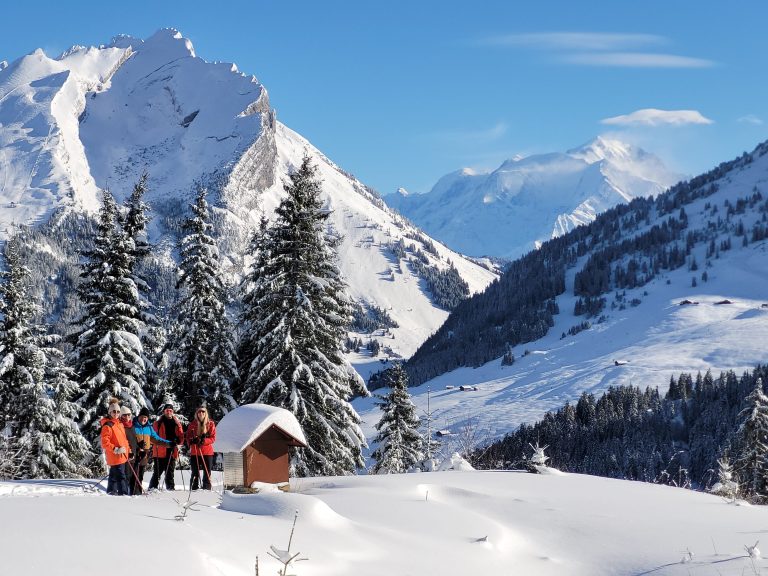
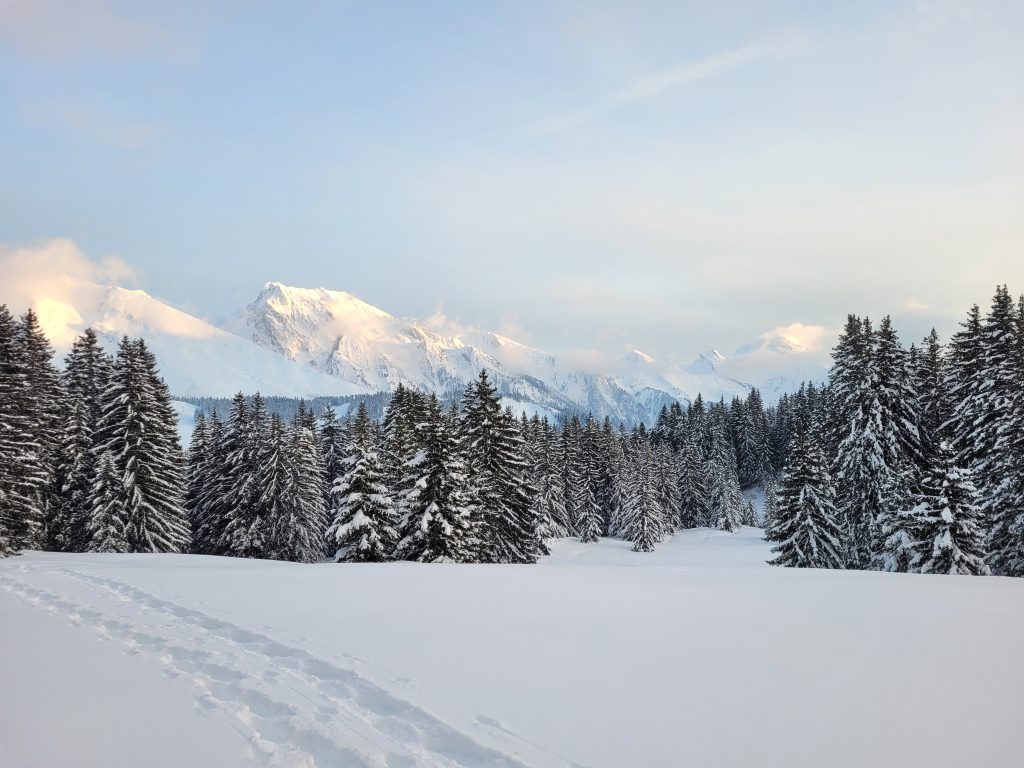
It lives up to its name. Shared with its neighbor, La Clusaz, the Beauregard Plateau is an elevated expanse that offers one of the most spectacular panoramas in Haute-Savoie. As you arrive via the Col de la Croix Fry, the landscape opens up into a gentle, rolling terrain, alternating between pristine clearings and snow-laden fir forests.
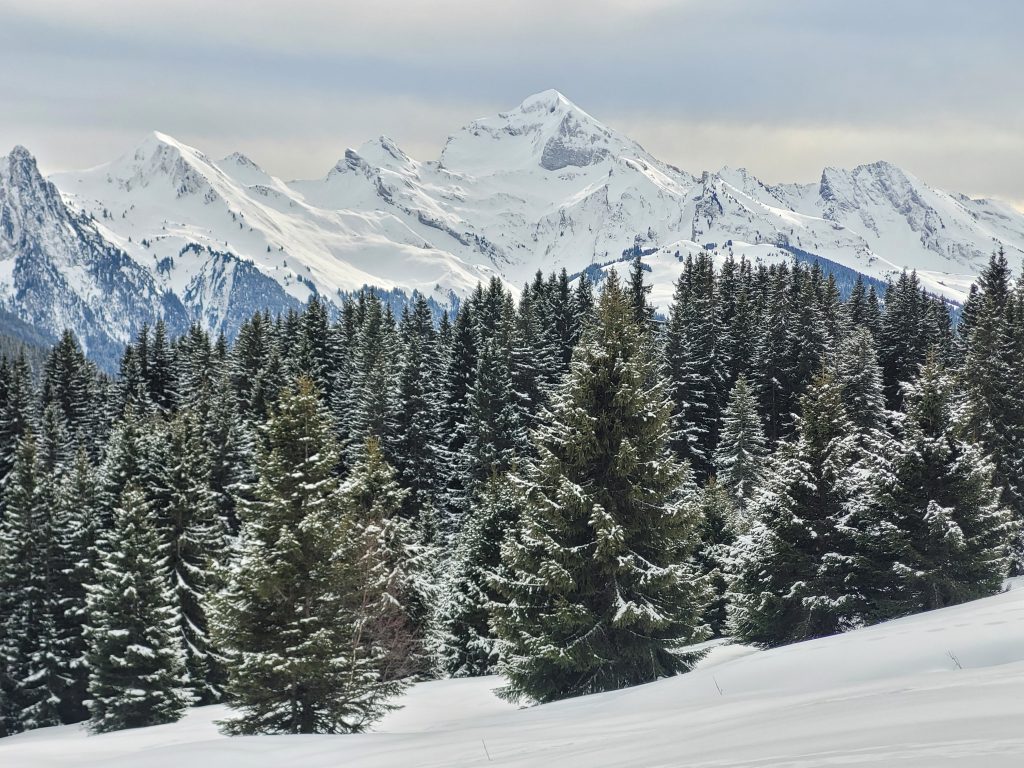
What makes this spot unique for snowshoeing is its exposure and 360-degree view. Throughout your trek, the Aravis mountain range rises before you, with the majestic peak of Mont Blanc standing as a backdrop. The plateau’s undulating landscape allows for easy, effortless movement, making it a perfect setting for everyone—from families to those simply looking to take in the scenery. The Beauregard Plateau: a panoramic balcony overlooking Mont Blanc
An ecological treasure designated as a Natura 2000 site, featuring peatlands
Beneath its icy shell, the Beauregard plateau harbors ecosystems of immense value, earning it protection under the European Natura 2000 network. The plateau is particularly renowned for its high-altitude peat bogs. These precious wetlands, which have taken thousands of years to form, act as natural sponges. In winter, snowshoes allow us to traverse these fragile environments without trampling them—habitats that shelter a unique array of plant and animal life, patiently awaiting the arrival of spring to awaken.
The authenticity of Aravis far from the major tourist flows
What strikes you instantly when exploring Manigod in winter is an atmosphere that has remained profoundly rural and authentic. There are no high-rise apartment blocks at the foot of the slopes here; instead, you find hamlets dotted with traditional, centuries-old wooden chalets, their *tavaillon* (shingle) roofs bowing under the weight of the snow.
It was precisely here, at the Col de la Croix Fry, that the legend of the famous chef in the black hat, Marc Veyrat, began. It was in his parents’ family inn—”Chez Marc Veyrat” (now known as Marie-Ange)—that he took his first steps in the culinary world, drawing inspiration from wild plants and the local terroir of Manigod, eventually going on to earn three Michelin stars. This local gastronomic legacy still resonates within the very soul of the valley.
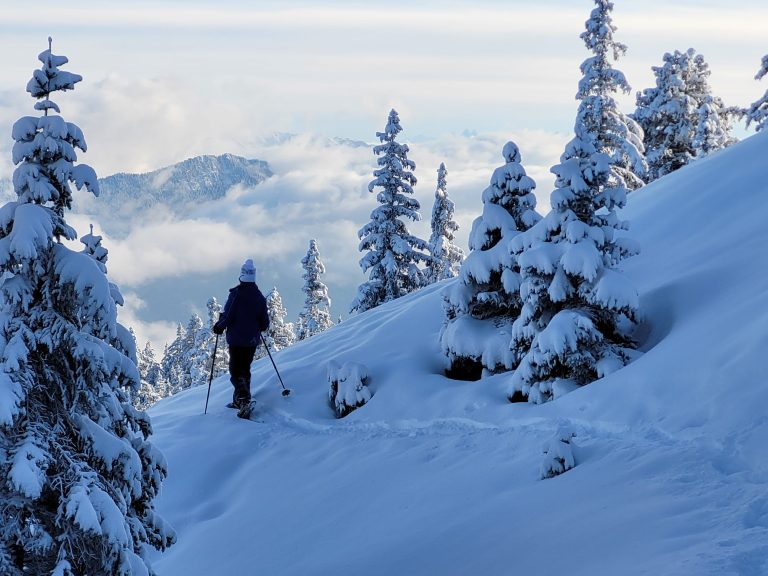
Venturing out on snowshoes through the valleys of Manigod offers the luxury of silence. The steady crunch of snowshoes against fresh snow becomes the only background sound. As you move away from the traditional marked trails, you pass through dense spruce forests—reminiscent of the landscapes of the Canadian Far North—before emerging onto slumbering alpine pastures where you feel as though you are the only person in the world.
What skill level is required for snowshoeing in Manigod?
One of the great strengths of this area lies in the diversity of its terrain, made possible by an abundant snowfall:
For beginners or those looking for a leisurely outing: The area around the Col de la Croix Fry and the gentle trails of the Beauregard plateau are perfect for a first experience with snowshoes. You can enjoy yourself right away, with no special technique required.
For the more athletic: As you head toward the wilder slopes of the Pointe d’Orsière, the terrain becomes more challenging. The valleys—or *combes*—are steeper, the hollows more secluded, and the physical exertion is rewarded with a sense of total isolation.
A guide’s advice for a successful winter outing
Snowshoeing in winter requires a careful reading of the mountain landscape. Beneath its apparent tranquility, nature in winter imposes its own rules. It is essential to know how to assess the quality of the snowpack, avoid slopes exposed beneath ridgelines, and possess the navigational skills to find your way if fog or a blizzard obscures your tracks.
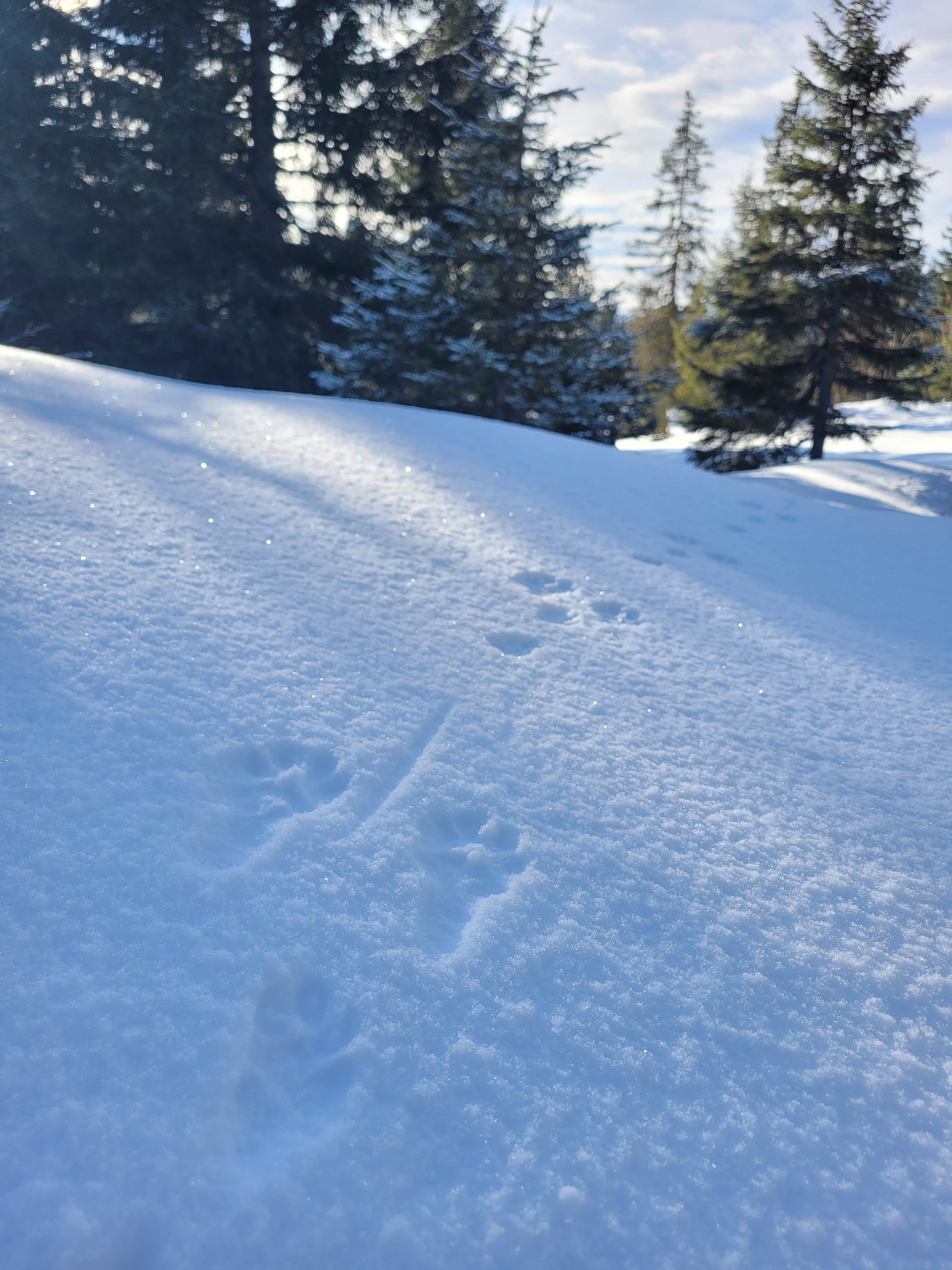
Furthermore, the forests of Manigod are home to fragile wildlife, such as the black grouse—an iconic Alpine bird that survives the winter by digging igloo-like shelters in the snow. Disturbing these birds in such a protected area can be fatal. Staying on routes that respect the environment is crucial to minimizing human impact during the winter months.
Manigod is full of secret little valleys, hidden viewpoints, and forest trails known only to the locals. If you are looking for a fully immersive experience—venturing off the beaten path safely within this Natura 2000 protected area while learning about the history of this unique valley—the best approach is to share the experience with a professional guide.
To craft your own bespoke adventure, explore our various packages and join us for a snowshoeing excursion in Manigod.